Venus's extraordinarily slow retrograde rotation — one of the great unsolved mysteries of planetary science — was likely caused by a chance encounter with a moon-sized impactor some 4.5 billion years ago, according to a new study published in astronomy journals this month. The finding offers the most compelling explanation yet for why Earth's sister planet spins backwards at an agonizingly slow pace.
Venus's Bizarre Rotation Explained
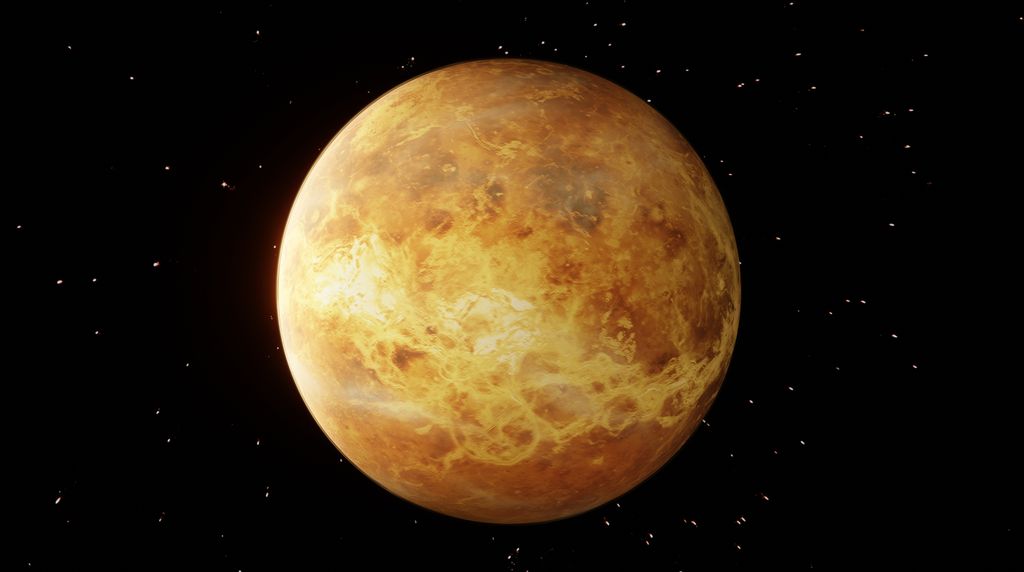
Venus rotates once every 243 Earth days — slower than any other planet in the solar system. Even more strangely, it rotates in the opposite direction (retrograde) compared to most planets. A Venusian day is actually longer than its year (225 Earth days). The new research suggests that a high-velocity impact with a body roughly the size of Earth's moon, striking at a high angle, could have reversed Venus's original prograde rotation and drastically slowed it down.
| Planet | Rotation Period | Direction | Day Length vs Year |
|---|---|---|---|
| Earth | 24 hours | Prograde (west to east) | Day < Year |
| Venus | 243 Earth days | Retrograde (east to west) | Day > Year |
| Mars | 24.6 hours | Prograde | Day < Year |
| Uranus | 17.2 hours | Tilted 98 degrees | Day < Year |
How the Impactor Changed Venus Forever
The study, led by researchers analyzing gravitational and geological data, modeled thousands of impact scenarios. The most plausible scenario involves an object 0.5-1 times the mass of Earth's moon striking Venus at an angle between 60 and 90 degrees at a velocity of 10-15 km/s. Such an impact would not only reverse Venus's rotation but also explain why the planet lacks a large moon — unlike Earth, which gained its moon from a similar impact scenario. The debris from the Venus impact likely either fell back to the surface or was ejected from the system entirely, rather than coalescing into a satellite.
Why This Discovery Matters
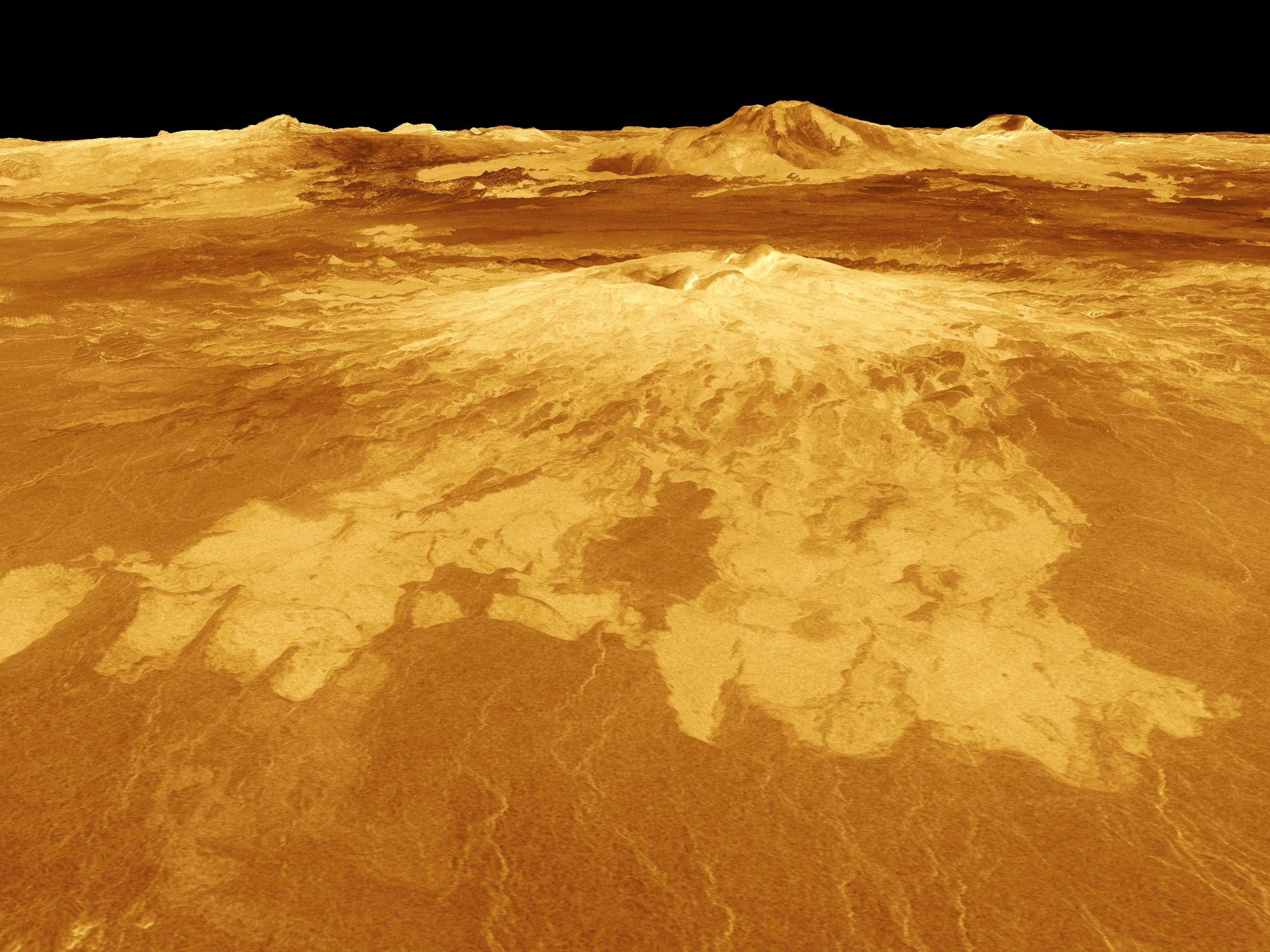
Understanding Venus's rotation history is crucial for planetary science because Venus is often considered Earth's twin — similar in size, mass, and composition, but radically different in atmosphere, surface conditions, and rotation. The impact theory helps explain how two nearly identical planets could end up so different. Venus's slow rotation affects its magnetic field (Venus has almost none), its atmosphere (extreme greenhouse effect with surface temperatures of 462 degrees Celsius), and its geological evolution.
For India's space program, the finding is particularly relevant. ISRO has been exploring a future Venus mission (Shukrayaan-1), currently in the planning stages. Understanding Venus's geological history would help Indian scientists design better experiments and choose landing sites. The discovery also feeds into the broader search for Earth-like exoplanets — if a moon-sized impact can so dramatically alter a planet's rotation, then the rotation rate of exoplanets may tell us about their impact history and habitability.