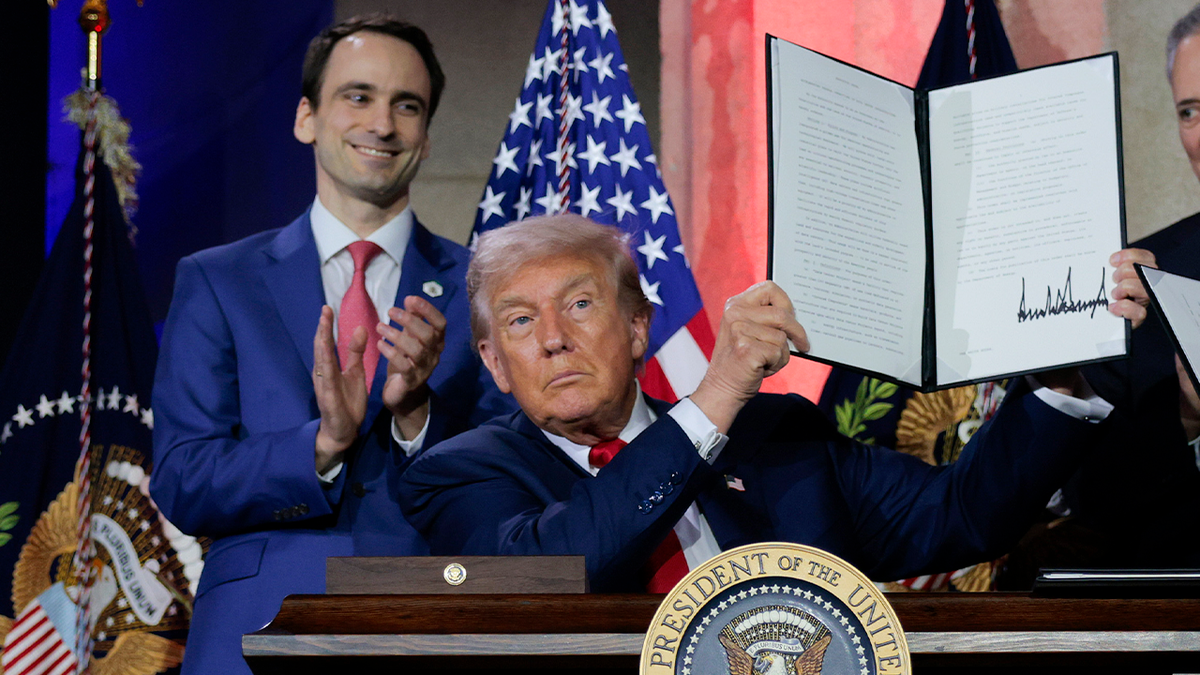
President Trump signed a sweeping Executive Order on June 2 titled "Promoting Advanced Artificial Intelligence Innovation and Security," establishing the most detailed federal AI policy framework since the revocation of Biden's AI order in January 2025. The order directs federal agencies to deploy AI-powered cyber defenses, creates a voluntary framework for frontier model engagement, and prioritizes prosecution of AI-enabled crime.
Key Provisions of the Executive Order
| Provision | Impact |
|---|---|
| Covered Frontier Model designation | Classified benchmarking for models with advanced cyber capabilities |
| Voluntary early access for government | AI developers asked to share frontier models up to 30 days pre-release |
| AI cybersecurity clearinghouse | Coordinated vulnerability scanning across private sector and critical infrastructure |
| DOJ enforcement prioritization | Existing criminal laws applied to AI-enabled cyberattacks and fraud |
| Workforce expansion | Expanded cybersecurity hiring pathways |
Trump Administration's AI Policy Journey
This order fills a gap that existed since Trump revoked Biden's AI order in January 2025. The administration has taken a phased approach to AI governance: the AI Action Plan (July 2025), executive orders on data center permitting and preventing "woke AI" in federal government, the National Policy Framework for AI (March 2026), and now this cybersecurity-focused executive order. The order explicitly balances innovation promotion with national security, avoiding mandatory preclearance or licensing requirements that industry had feared.

Industry Response and Implications
The order arrives as the AI industry undergoes massive transformation. OpenAI's market share has fallen below 50 percent, Anthropic filed confidentially for its ~$900 billion IPO, and AI infrastructure spending has reached $725 billion. Major AI companies including OpenAI, Anthropic, Google, and Microsoft are expected to participate in the voluntary early-access framework. The order specifically protects against creating "mandatory governmental licensing" requirements — a key concern for the industry.
For Indian AI companies and developers, the order has mixed implications. US AI policy increasingly treats frontier AI as a national security asset, potentially restricting access to cutting-edge models for foreign entities. This aligns with the earlier US block on Anthropic's most advanced AI to foreign access, which India called a "wake-up call." Indian AI startups may need to accelerate domestic model development rather than relying on US frontier models.
Why It Matters: This executive order shapes the regulatory environment for the most consequential technology of our era. For Indian tech professionals working with US-based AI companies, the voluntary early-access framework and classified benchmarking could create new compliance requirements. For Indian AI startups, it reinforces the urgency of building sovereign AI capabilities rather than depending on restricted US models.
For related Voxlogue context, read India Signals AI Policy Shift: MeitY Says Time Is Right for Dedicated AI Law, and India and Japan Sign AI Cooperation Framework, First Defence Co-Development Pact at 16th Annual Summit.