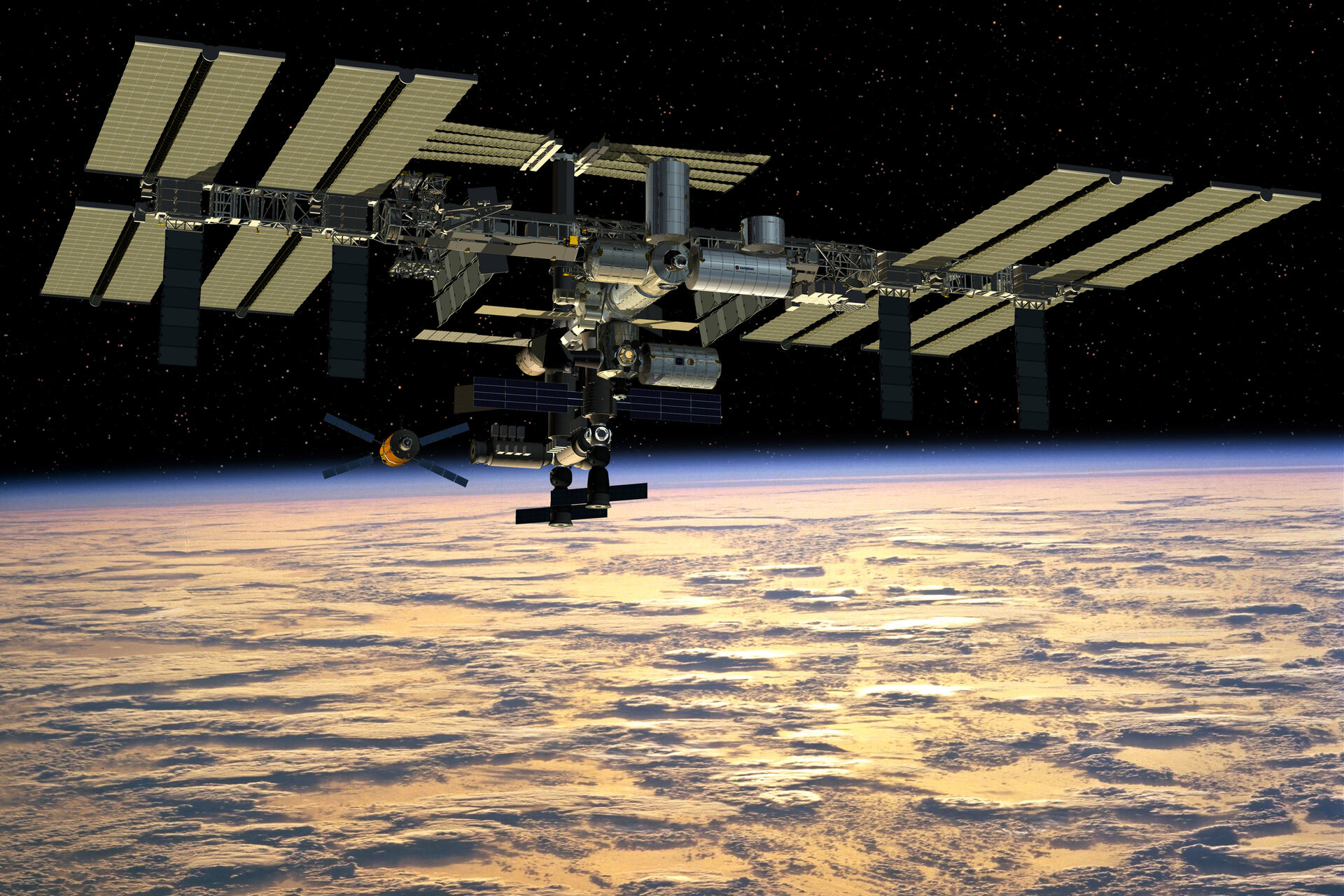
In a breakthrough that could transform biomedical manufacturing, NASA flight engineer Jessica Meir successfully harvested blood stem cells aboard the International Space Station that had been growing in microgravity since their arrival on a SpaceX Dragon cargo craft in May. The experiment, conducted inside the Kibo laboratory module's Life Science Glovebox, opens new possibilities for producing life-saving stem cell therapies in space.
The Breakthrough
Blood stem cells — the master cells that give rise to all blood cells — are notoriously difficult to grow in sufficient quantities on Earth. Gravity causes them to settle and cluster, limiting their growth and viability. In microgravity, however, the cells remain suspended and can proliferate more freely, potentially producing much larger quantities for therapeutic use.
After the cells were harvested, Meir examined their density and viability using the KERMIT fluorescent microscope aboard the station. Early results suggest the microgravity-grown cells show excellent viability and density characteristics.
Why Microgravity Matters for Medicine
| Factor | On Earth (1G) | In Space (Microgravity) |
|---|---|---|
| Cell settling | Cells cluster at bottom | Cells remain suspended |
| Growth surface | Requires large surface area | 3D suspension growth |
| Nutrient delivery | Gravity-dependent | Uniform diffusion |
| Cell density | Limited by surface | Potentially much higher |
| Scaffolding needed | Yes (biomaterials) | No (self-assembly) |
Implications for Healthcare
The ability to grow blood stem cells in microgravity could revolutionize treatments for leukemia, lymphoma, and other blood disorders that require stem cell transplants. Currently, patients often face long waits for compatible donors, and the limited quantity of cells that can be grown on Earth constrains treatment options.
Space-based biomedical manufacturing could eventually produce stem cell therapies at scale, reducing costs and increasing availability. Companies like SpaceX and Axiom Space are already developing commercial space stations that could host such manufacturing facilities.
India Angle
India's space agency ISRO has been exploring biomedical applications of microgravity through its own experiments and collaborations. India's Gaganyaan programme, which aims to send Indian astronauts to space, could open new opportunities for Indian researchers to conduct similar stem cell experiments in microgravity.
Given India's large population and high burden of blood disorders — including thalassemia and sickle cell disease — space-based stem cell manufacturing could have significant implications for Indian healthcare. Indian pharmaceutical companies and research institutions are closely watching developments in this field.
Limitations
Space-based manufacturing remains extremely expensive, with current costs of over $10,000 per kilogram to orbit. The scalability of the approach depends on reducing launch costs through reusable rockets and developing automated production systems for commercial space stations. The research is still at an early stage, and clinical applications are likely years away.
For related Voxlogue context, read ISS Microgravity Science Glovebox Reaches 100,000 Hours of Continuous Research Operations, and Cell-Free Biomanufacturing Breakthrough: Freeze-Dried Systems Could Revolutionise Drug and Vaccine Production Globally.