What Happened
The Jiangmen Underground Neutrino Observatory (JUNO) in southern China has delivered its first major scientific breakthrough. Published as the cover article in Nature on June 11, 2026, the debut result used just 59 days of data to achieve the most precise measurements yet of two fundamental neutrino oscillation parameters — reducing uncertainties by a factor of 1.6 compared with the combined results from all previous experiments conducted over several decades.
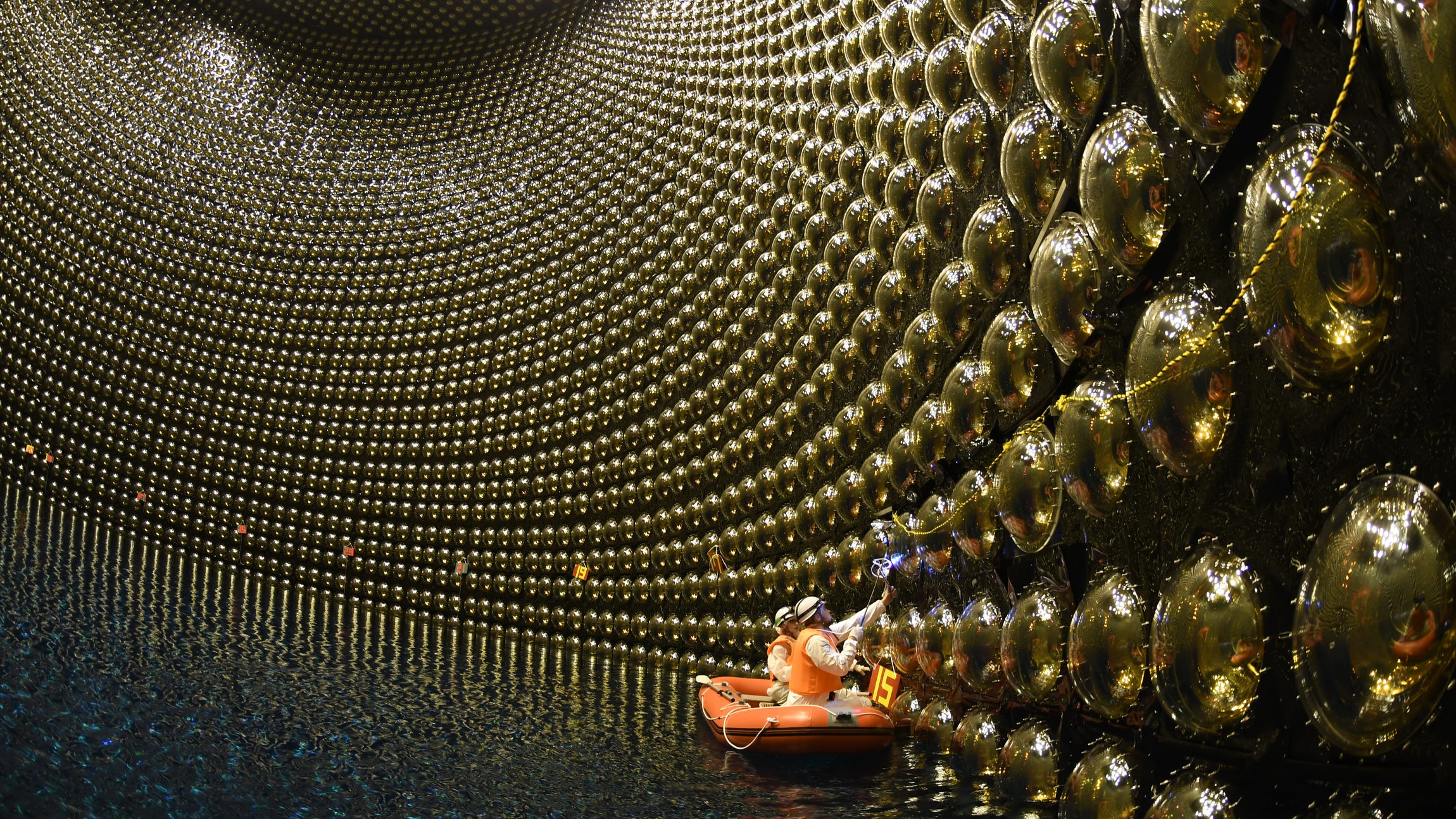
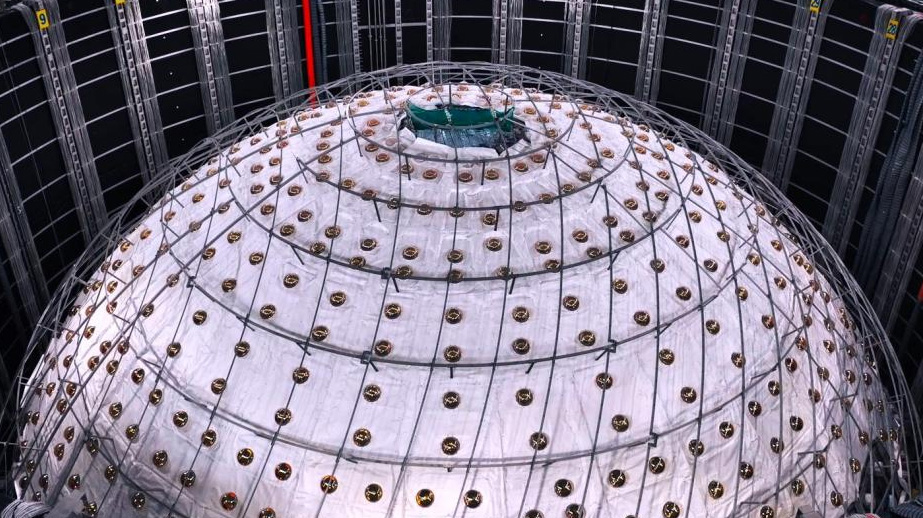
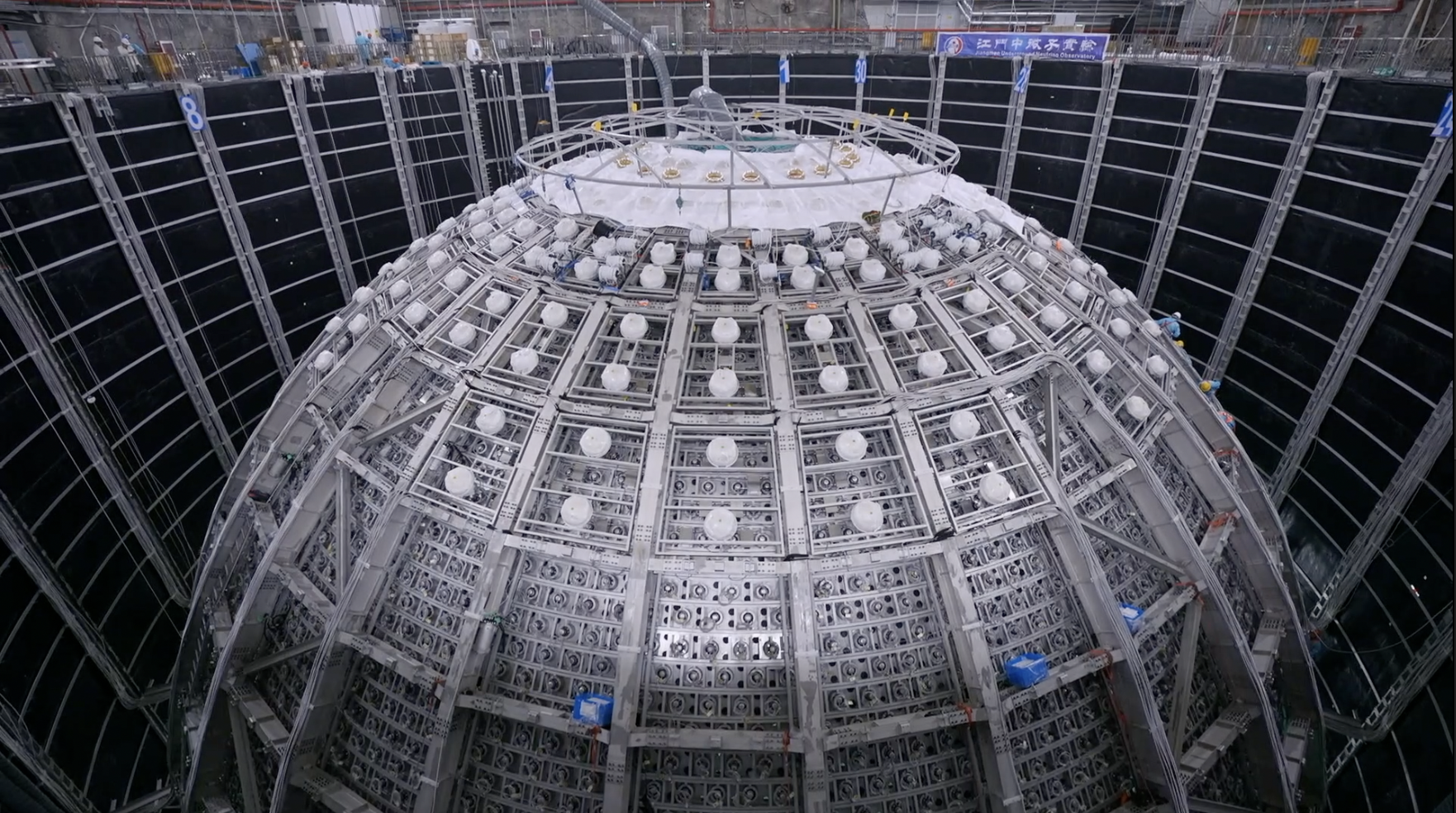
Buried 700 metres underground in Guangdong province, JUNO is a 13-story-tall spherical detector filled with 20,000 tonnes of liquid scintillator. It primarily measures electron antineutrinos from the nearby Yangjiang and Taishan nuclear power plants.
Why Neutrinos Matter
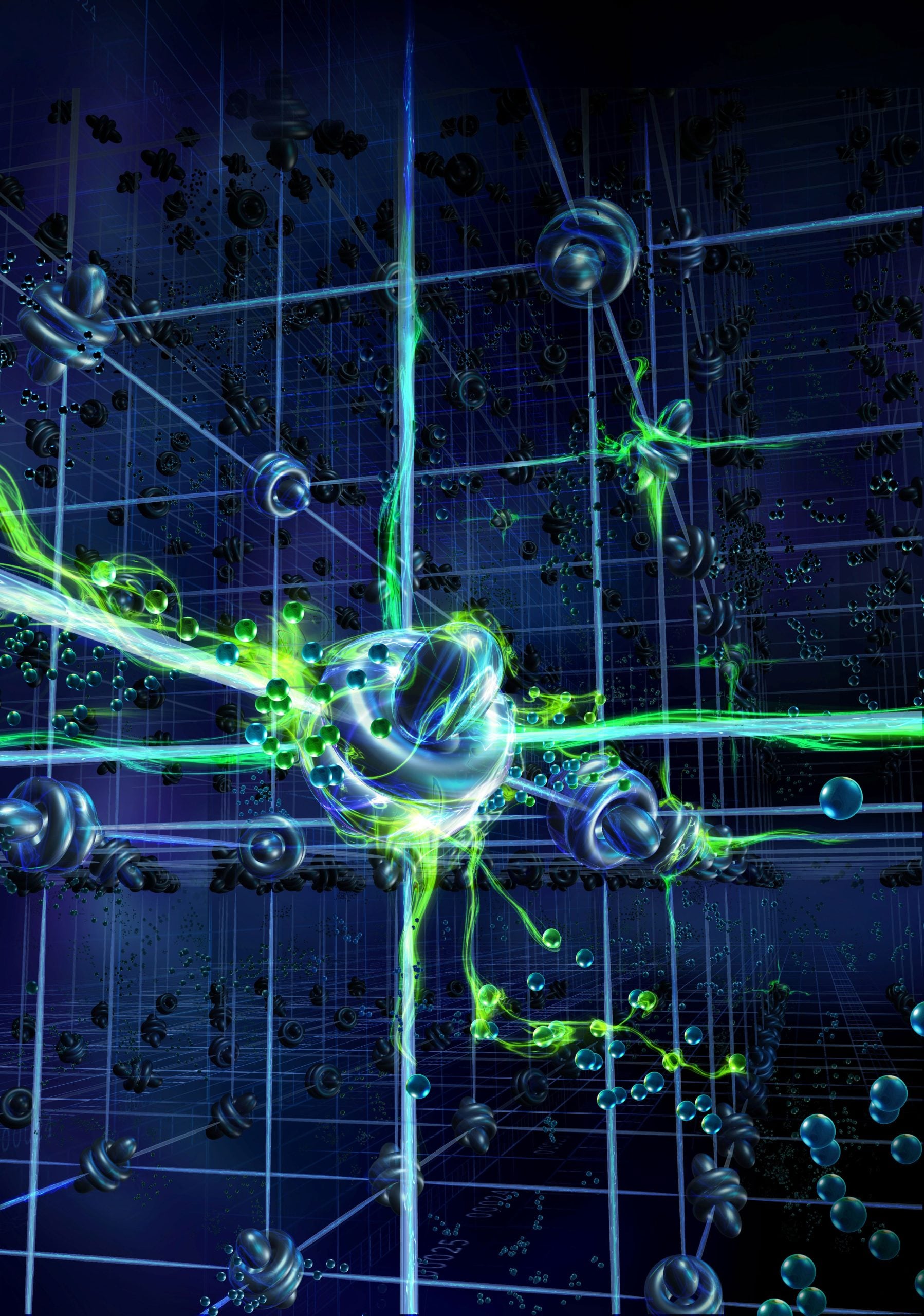
Neutrinos are among the most abundant but least understood particles in the universe. Trillions pass through your body every second — products of the Sun, cosmic rays, nuclear reactors, and the Earth's own radioactive decay. They have tiny masses so small that physicists still do not know which of the three neutrino types is the heaviest.
Determining this "neutrino mass ordering" is one of particle physics biggest open questions. It has implications for understanding why the universe contains matter rather than equal amounts of matter and antimatter, and for models of how galaxies and large-scale cosmic structures formed.
The First Results
| Metric | Detail |
|---|---|
| Data period | 59 days (Aug 26 – Nov 2, 2025) |
| Publication | Nature cover article, June 11, 2026 |
| Key achievement | Best-ever precision on two neutrino oscillation parameters |
| Improvement | 1.6x reduction in uncertainty vs decades of prior experiments |
| Detector size | 13-story sphere, 20,000 tonnes liquid scintillator |
| Depth | 700 metres underground |
| Primary neutrino source | Yangjiang and Taishan nuclear reactors |
| Collaboration | International JUNO Collaboration, led by Chinese Academy of Sciences |
Why This Result Matters
The Nature reviewer wrote: "These results not only validate the detector performance and analysis methodology but also establish JUNO as a key player in the emerging precision era of neutrino oscillation physics, with direct implications for tests of the three-flavor paradigm, global oscillation fits, and future determinations of the neutrino mass ordering."
A companion Nature News & Views article stated: "This first result from JUNO marks the dawn of the next era of precise neutrino oscillation measurements."
Juan Pedro Ochoa-Ricoux of UC Irvine, who co-leads a JUNO team, told Scientific American: "The physics result is already world-leading in the areas that it touches. We measured two neutrino oscillation parameters, and that measurement is already for both parameters the best in the world."
What JUNO Cannot Yet Tell Us
Mass ordering: JUNO main goal — determining which neutrino type is heaviest — requires more data. The 59-day result builds confidence that the detector can achieve this, but has not done so yet.
Beyond Standard Model: The paper does not reveal new physics beyond the Standard Model. It validates and sharpens existing measurements, setting the stage for future discoveries.
Statistical limitations: 59 days is a small fraction of JUNO planned multi-year run. The true test will come with larger datasets.
Relevance to India
India-Based Neutrino Observatory (INO): India's own neutrino project, planned for Theni district in Tamil Nadu, has faced years of regulatory and environmental delays. JUNO success strengthens the scientific case for INO, demonstrating what a dedicated underground neutrino detector can achieve.
Indian researchers in global collaborations: Indian physicists from IUCAA (Pune), IIA (Bengaluru), TIFR (Mumbai), and Harish-Chandra Research Institute are active participants in global neutrino experiments including DUNE (US) and Hyper-Kamiokande (Japan). JUNO results will feed into the worldwide neutrino programme that Indian scientists are part of.
STEM inspiration: A Nature cover paper from an Asian-led collaboration is significant for Indian physics students. It demonstrates that world-leading fundamental science infrastructure is no longer exclusive to the US and Europe.
What Next
JUNO will continue collecting data through at least 2030. The collaboration next milestone — determining the neutrino mass ordering — is expected within 3-6 years of data. Meanwhile, other neutrino experiments including DUNE in the US and Hyper-Kamiokande in Japan are racing toward the same goal.
Sources: Nature (Vol 654, June 11, 2026), Chinese Academy of Sciences, ScienceDaily, Scientific American, Bioengineer.org
Related on Voxlogue: Webb Spots Black Hole Stars — another frontier observatory rewriting cosmic history. Google I/O 2026 — India AI infrastructure keeping pace with global science.
See also: Scientists Discover 1,121 New Marine Species in a Single Yea · NASA ISS Air Leak Worsens: Crew Moved to Safe Haven, Risky R
Sources
- Nature — nature.com
- NASA — nasa.gov
- Voxlogue editorial research