India's economy presents a mixed picture as Goldman Sachs forecasts headline inflation to rise to 3.9 percent in 2026 — close to the RBI's 4 percent target — while the World Bank estimates India's GDP growth at 7.6 percent for FY2025-26. The country's forex reserves remain formidable at over $650 billion, providing a cushion against global economic volatility even as foreign portfolio investment flows show signs of moderation.
Goldman Sachs Inflation Forecast
Goldman Sachs analysts forecast headline inflation to rise to 3.9 percent year-on-year in 2026, close to the Reserve Bank of India's target of 4 percent. The RBI cut rates by 125 basis points last year and undertook a comprehensive set of measures to manage liquidity and support growth. The forecast suggests that while inflation remains manageable, there is limited room for further aggressive rate cuts.
The recent decline in crude oil prices following the US-Iran peace deal provides some relief. As Voxlogue reported, cheaper crude directly benefits India's import bill and helps contain inflationary pressures. However, food prices — particularly vegetables, pulses, and edible oils — remain volatile and could push inflation above the RBI's comfort zone.
| Indicator | Value | Source |
|---|---|---|
| GDP Growth (FY25-26) | 7.6% | World Bank |
| GDP Growth (FY26-27) | 6.6% (projected) | World Bank |
| Inflation (2026) | 3.9% (forecast) | Goldman Sachs |
| RBI Repo Rate | 5.75% (after 125bp cuts) | RBI |
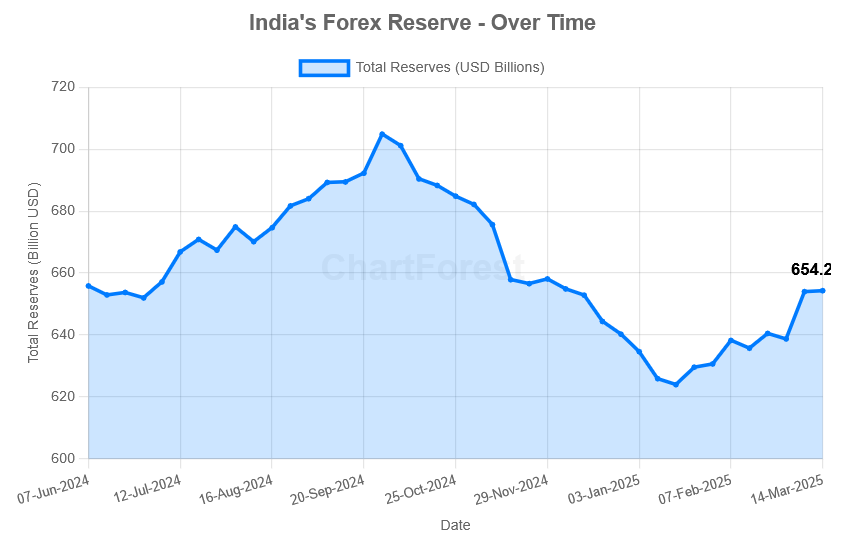
| Forex Reserves | $650B+ | RBI |
| Sensex | 77,156 | BSE |
Forex Reserves: A Cushion Against Global Shocks
India's forex reserves have remained robust, providing a critical buffer against external shocks. The reserves, which peaked at over $700 billion before dipping slightly, cover approximately 11 months of imports. This cushion is particularly important given the unpredictable global environment — US tariff policies, geopolitical tensions in West Asia, and volatile capital flows. The RBI has been actively managing the rupee, which has remained relatively stable despite global headwinds, trading at around 94.52 to the US dollar.
RBI Policy and the Growth-Inflation Balance
The RBI faces a delicate balancing act. With GDP growth moderating to 6.6 percent in FY26-27 (per World Bank projections), there is pressure to support growth through accommodative monetary policy. However, inflation hovering near the 4 percent target limits the scope for further rate cuts. The RBI has also undertaken measures to attract foreign capital, including removing rate restrictions on FCNR deposits — a move that could help stabilize the rupee and boost forex reserves.
Why It Matters: For Indian households, controlled inflation means stable prices for everyday goods. For investors, the macroeconomic stability supports continued equity market strength. For Indian businesses, stable interest rates and a predictable policy environment enable long-term investment planning. The interplay between GDP growth, inflation, and RBI policy will determine India's economic trajectory through 2027.
For related Voxlogue context, read Oil Prices Extend Decline as Strait of Hormuz Reopening Nears, India Set to Benefit from Lower Crude, and Sensex Nifty Set for Positive Open on June 23 as US-Iran Deal Eases Crude Oil Concerns.