.png?1678746405)

What Is DiffusionGemma?
Google DeepMind on June 10 released DiffusionGemma, a 26-billion-parameter open-weights model that abandons the standard token-by-token approach to text generation in favor of diffusion — the same technique underpinning image generators like Stable Diffusion. The result: over 1,000 tokens per second on a single NVIDIA H100 GPU, roughly four to five times faster than comparable autoregressive models.
Released under Apache 2.0 — the most permissive standard license for open-source AI — the model allows commercial use, modification, and redistribution without restriction. It is available on Hugging Face, Kaggle, and Google Cloud Vertex AI Model Garden with day-zero NVIDIA optimization.
How Text Diffusion Works
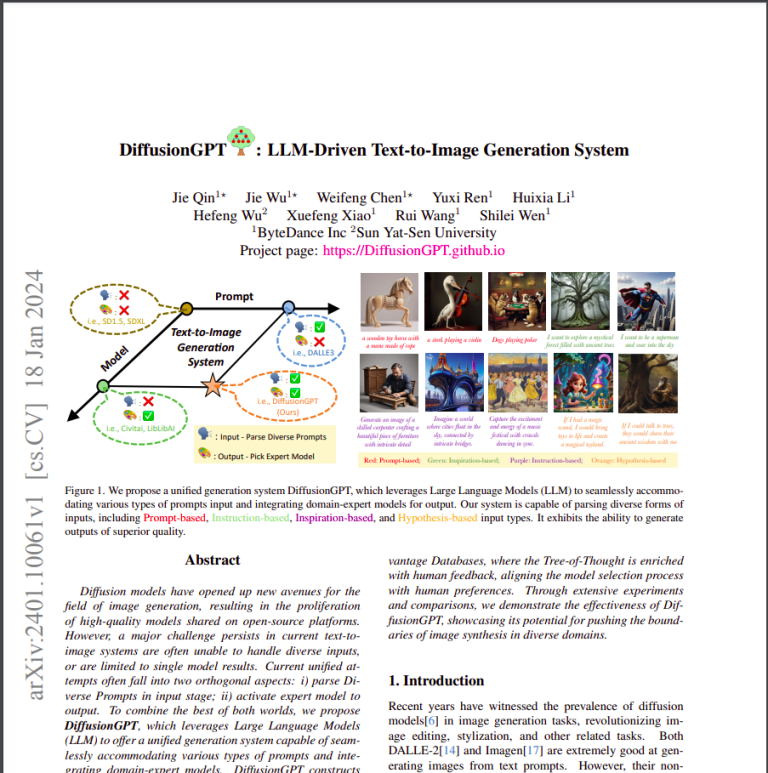
Traditional autoregressive models like GPT, Claude, and Gemini generate text one token at a time, left to right — each word predicted based on the ones already written. DiffusionGemma does the opposite: it starts from a canvas of random tokens and refines them in parallel, much like image models turn noise into a sharp photo.
Each forward pass generates 256 tokens simultaneously with bidirectional attention — every token can attend to all others. The model then iteratively refines its own output, evaluating the entire text block at once to close formatting and fix mistakes in real-time.
Specifications
| Property | Value |
|---|---|
| Architecture | 26B Mixture of Experts (MoE), 3.8B active parameters |
| Backbone | Gemma 4 (26B-A4B) with diffusion head added |
| Input modalities | Text, image, video → text output |
| Context window | 256K tokens |
| Languages | 140+ |
| Speed | 1,000+ tokens/sec on single H100; 4-5x faster than autoregressive |
| Hardware | Native NVFP4 support on NVIDIA Blackwell GPUs |
| License | Apache 2.0 (commercial use, modification, redistribution) |
The Trade-Off: Speed vs Quality
Google is transparent about the catch: DiffusionGemma scores lower than standard Gemma 4 on every published benchmark, including MMLU and coding tests. Google positions it as experimental — not a replacement for production models, but a tool for speed-critical, interactive local workflows like in-line editing, rapid iteration, and generating non-linear text structures.
The model is particularly suited for single-user GPU workloads where latency matters more than maximum accuracy: real-time code completion, live document editing, and interactive creative tools.
Built on Gemini Diffusion Research
DiffusionGemma is the open-weights descendant of Gemini Diffusion, a closed technology Google first demonstrated at I/O 2025. That demo showed a model filling an entire screen with text simultaneously instead of word-by-word. Now that same idea is available as an open model anyone can download and run locally.
What It Means for India
Local-first AI: Indian developers and startups can run DiffusionGemma on consumer GPUs (RTX series) for real-time applications — no cloud API costs. The 3.8B active parameters make it practical for edge deployment.
Indic language potential: The 140+ language support and open license mean Indian AI labs can fine-tune DiffusionGemma for Hindi, Tamil, Telugu, Bengali, and other Indian languages. Speed-critical use cases like live translation and real-time content moderation become feasible on local hardware.
Startup applications: Edtech platforms needing instant feedback, customer support systems requiring sub-second responses, and creative tools for Indian content creators all benefit from the speed trade-off.
Caveat: The quality gap means DiffusionGemma is not suitable for applications requiring high factual accuracy — medical, legal, or financial use cases should stick with autoregressive models.
Sources: Google DeepMind, Google Blog, MLQ News, MarkTechPost, NVIDIA Blog, The Decoder
Related on Voxlogue: Google I/O 2026 Full Roundup — the broader context of Google AI announcements. Webb Spots Black Hole Stars — another frontier of discovery.
See also: US Blocks Foreign Access to Anthropic's Most Advanced AI — W · Elon Musk Becomes World's First Trillionaire: SpaceX's Recor
Sources
- Reuters Technology — reuters.com/technology
- TechCrunch — techcrunch.com
- Voxlogue editorial research