Quake Strikes Near Palu
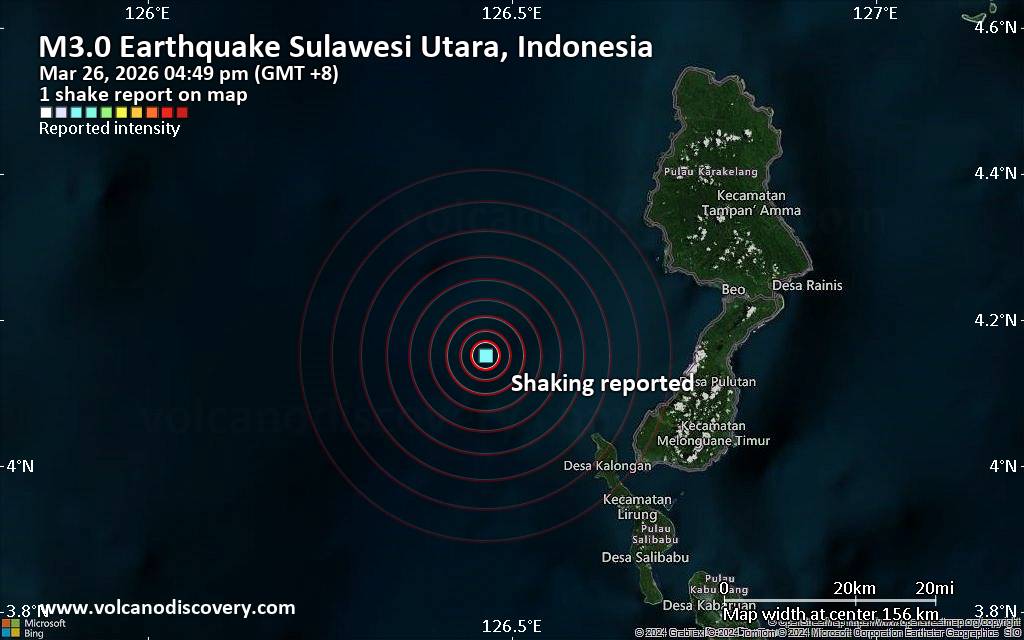
A 6.7-magnitude earthquake struck near Indonesia Sulawesi Island on Tuesday morning, according to the country geophysics agency BMKG. The epicenter was located approximately 42 kilometers southeast of Palu, the provincial capital of Central Sulawesi, at a shallow depth of 10 kilometers.
The shallow depth of the quake amplifies its potential for surface damage, though initial reports from local authorities have not yet confirmed casualties or structural damage. Indonesia National Disaster Mitigation Agency (BNPB) has deployed assessment teams to the affected region. No tsunami warning has been issued as of early reports.
Seismic History of the Region
Central Sulawesi remains seismically vulnerable due to its location on the Pacific Ring of Fire. The city of Palu was devastated by a 7.5-magnitude earthquake and subsequent tsunami in September 2018 that killed over 4,300 people and displaced more than 170,000. That disaster exposed significant gaps in Indonesia early warning systems and disaster preparedness infrastructure.
Since 2018, Indonesia has invested in upgrading its tsunami detection network and community-based early warning systems, though coverage gaps persist in remote areas. The BMKG has been commended internationally for its rapid earthquake reporting since implementing reforms after the 2018 disaster.
Ring of Fire Activity in 2026
The Sulawesi quake is the latest in a series of significant seismic events along the Pacific Ring of Fire in 2026. Seismologists at Indonesia Institute of Sciences have noted a modest uptick in moderate-to-large earthquakes across the Indonesian archipelago this year, though they caution against drawing premature conclusions about seismic clustering, which can occur randomly in statistically active regions.
For context on how natural disasters intersect with global infrastructure planning, scientific understanding of the ocean floor and tectonic systems remains surprisingly incomplete — over 90% of ocean species are still unknown, and seafloor mapping lags far behind land-based geological surveys.
Response and Monitoring
Indonesian authorities have activated standard earthquake response protocols, including coordination between BMKG, BNPB, and local government agencies. International monitoring agencies, including the US Geological Survey, are independently assessing the event parameters. Aftershock activity is expected in the coming hours and days, and residents in affected areas have been advised to remain alert and avoid damaged structures.
The quake comes at a time when global attention is focused on the G7 Summit in France, where disaster resilience and climate adaptation funding for vulnerable nations like Indonesia are among the agenda items being discussed by world leaders.